We continue to offer the services originally developed under our former company name, “Keihanna Healthy Vegetables,”
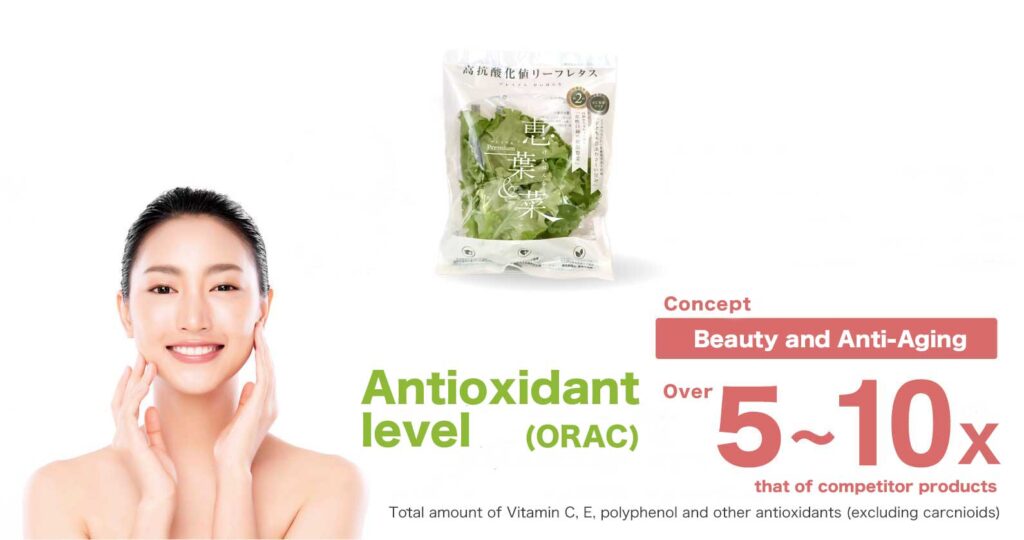
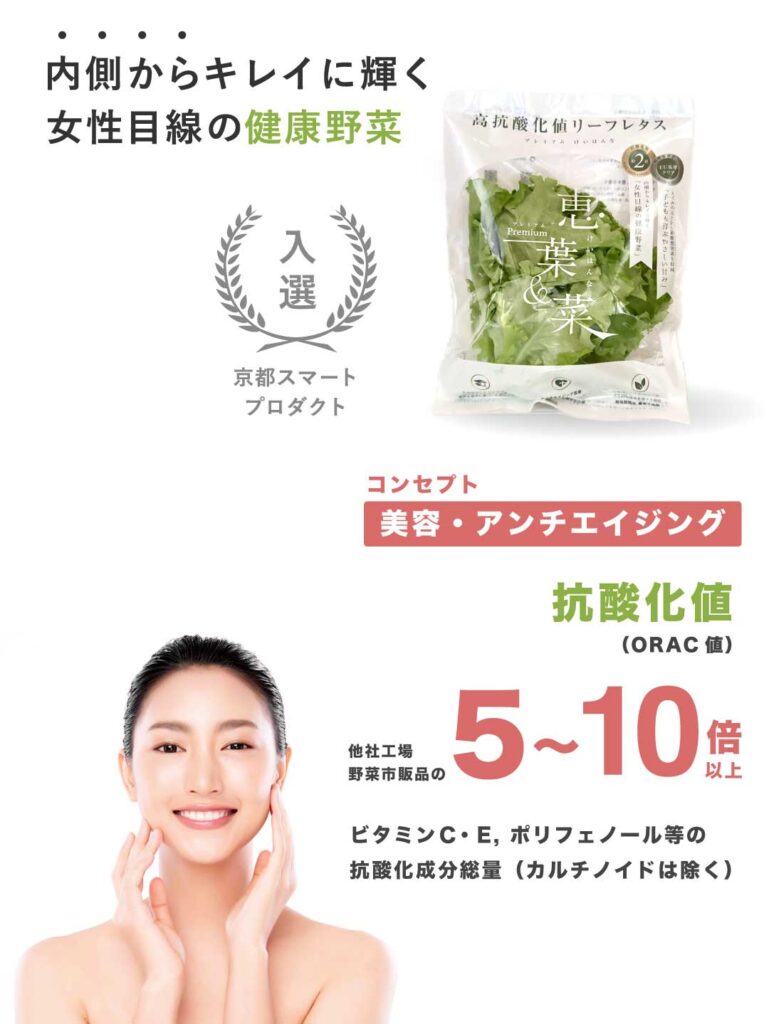
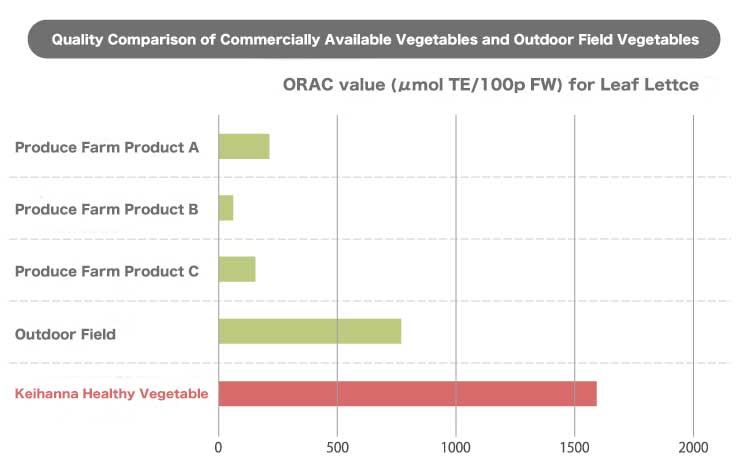
The ORAC value, which indicates antioxidant capacity,
is approximately 5–10 times higher than commercially available factory-grown vegetables.
What is the ORAC Value?・・・
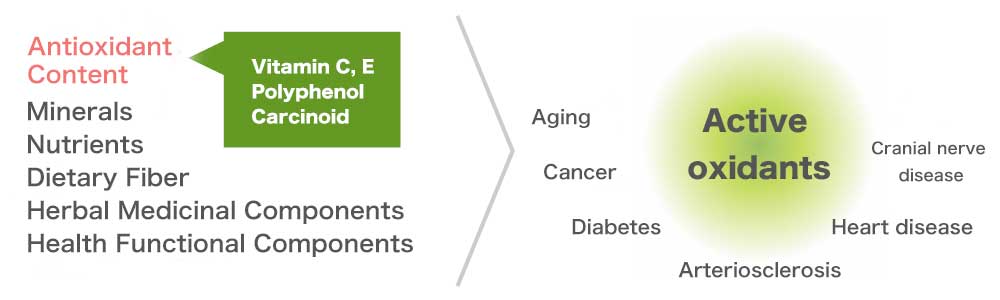
A quantified analysis of the effectiveness of “antioxidants” — known as the seventh essential nutrient — in removing reactive oxygen species that accelerate aging.
This includes antioxidant compounds such as Vitamins C and E, and polyphenols (excluding carotenoids).
By focusing on the needs of health-conscious consumers—particularly women who play a central role in managing family health—we have defined clear direction in taste, nutritional value, and overall product quality.
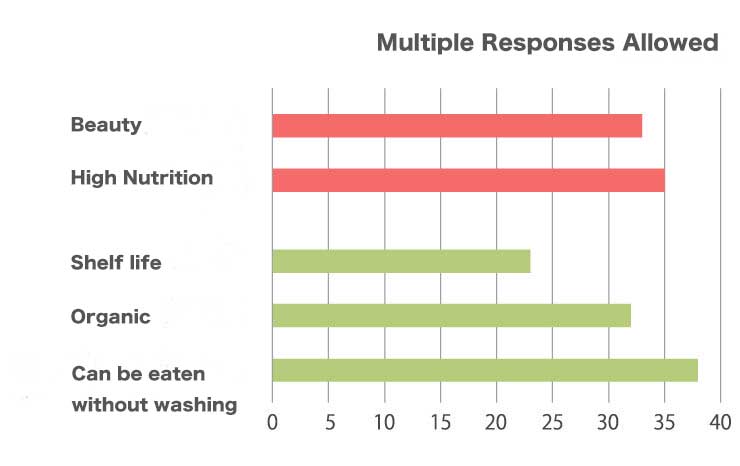
We conduct survey research primarily among female respondents to analyze consumer expectations for vegetables from multiple perspectives.
Key survey areas include:
* Factors considered most important when selecting vegetables
* Nutrients of greatest interest in vegetables
* Nutrients consumers feel they lack and actively try to supplement
* Types of supplements used on a regular basis
* Expected health benefits (e.g., antioxidant effects, skin health, anemia prevention, anti-aging, hair loss prevention, fatigue recovery, and lifestyle disease prevention)
Taste Test Survey
“It has no bitterness, and you can taste the sweetness.”
“The flavor of the vegetables is rich.”
“It’s rare for children to eat vegetables so willingly.”
“This was the first time they finished the entire serving.”
“It was the first time I could eat it without dressing.”
“I like that it’s natural and doesn’t rely on supplements.”
[Participants] Men and women in their 20s to 70s
[Gender Ratio] Approximately 1:2
[Number of Survey Responses] Over 100 participants
Health benefits of vegetables, fruits, and crops
Why increase antioxidant levels in vegetables?
Vegetables and fruits contain antioxidant compounds that are believed to help prevent various diseases by neutralizing reactive oxygen species (ROS) generated in the body. For this reason, doctors and nutritionists all over the world recommend consuming approximately 350 grams (about five servings) of vegetables and fruits daily to maintain good health.
Source: Next-Generation Plant Factory Research Program, Kyoto Prefectural University
Our vegetables are safe,
low-nitrate produce that meet international and EU standards.
Our vegetables
Nitrate concentration
2,000
ppm or less
《70% reduction》
Other commercially-available produce factory vegetables
Approx. 6,000-9,000 ppm or more
Some experts point out the following:
Nitrates - compounds harmful to the human body
Quality challenges in produce factory vegetables: nitrate (NO₃)
Nitrates themselves are not toxic, but a portion (approximately 5%) can be converted by oral bacteria into nitrites, which may then be further converted into potentially carcinogenic compounds.
Nitrites can combine with amines in foods (under acidic conditions, such as in the stomach) to form nitrosamines, which are known carcinogens. Nitrites can also bind to hemoglobin, forming methemoglobin, which reduces the blood’s ability to carry oxygen.
For this reason, the EU established in 1997 maximum limits for nitrate content.
* Spinach: 3,000 ppm (winter crop), 2,500 ppm (summer crop)
* Head lettuce: 2,500 ppm (greenhouse-grown), 2,000 ppm (open-field)
High nitrate concentrations are a primary cause of the bitter, harsh taste in vegetables.
Source: Next-Generation Plant Factory Research Program Report, Kyoto Prefectural University
Contact
Contact us / Apply here
For inquiries regarding seminars, online seminars, or speaking engagements, please feel free to contact us.
*Please note: This seminar is not open to companies in the same industry. Thank you for your understanding.*